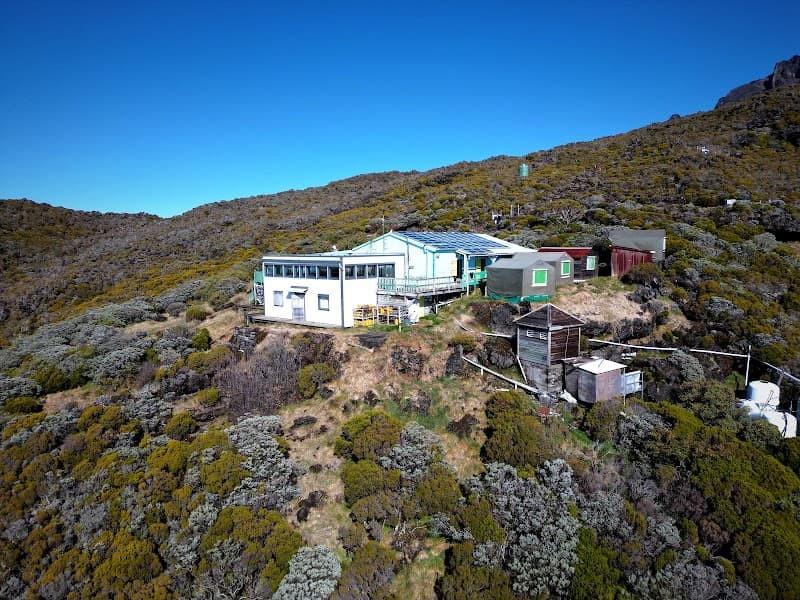
Cabane de l'Anse du Phoque
The place
Cabane de l'Anse du Phoque in the Kerguelen archipelago, Port-aux-Français/Courbet Peninsula sector (French Southern and Antarctic Lands, TAAF, southern Indian Ocean), at 24 m elevation. New Kerguelen cluster that appeared in batch 330 (extraordinary). IPEV (French Polar Institute Paul-Émile-Victor) scientific station/refuge, the southernmost and most isolated shelter ever added, an area of subantarctic tundra and Kerguelen cabbage Pringlea antiscorbutica (endemic, a scurvy remedy), colonies of elephant seals, fur seals, king/gentoo/rockhopper/macaroni penguins (approx. 1.2 M pairs) and wandering albatross Diomedea exulans (3.5 m wingspan, the largest flying bird in the world). Heritage of Norwegian/English/French whalers and sealers from the 19th century and the first expedition of Yves-Joseph de Kerguelen in 1772.
The setting
Kerguelen, Port-aux-Français/Courbet, TAAF, southern Indian Ocean, France, 24 m, new cluster batch 330 (extraordinary), IPEV Paul-Émile-Victor, southernmost and most isolated, subantarctic tundra, Pringlea antiscorbutica (endemic, scurvy remedy), elephant seals/fur seals/king-gentoo-rockhopper-macaroni penguins 1.2 M pairs/Diomedea exulans 3.5 m largest flying bird, 19th-century whalers-sealers, Kerguelen 1772.