South Branch Research Hut
The place
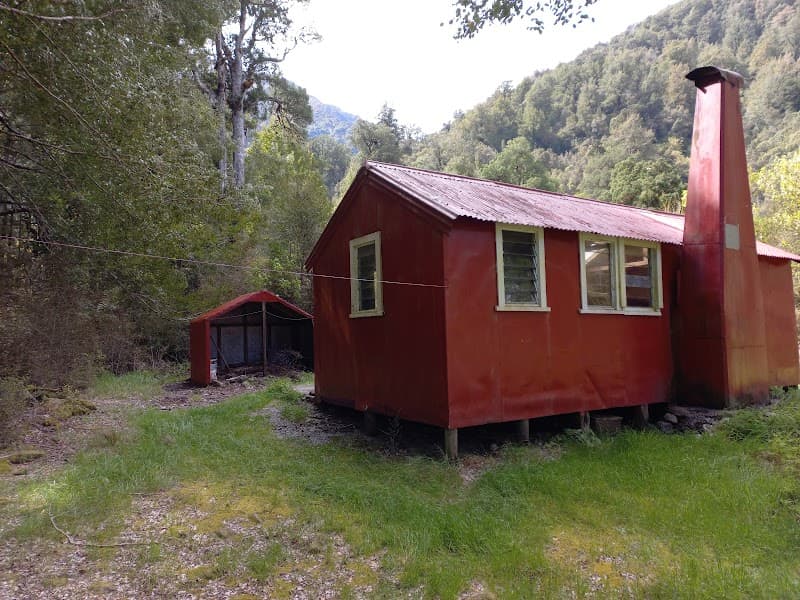
South Branch Research Hut in the Canterbury region, Lewis Pass/Boyle River sector (Southern Alps NW Canterbury, South Island, New Zealand), at 717 m altitude, the forested Boyle valley. Continuous New Zealand Canterbury cluster (batches 260-402). DOC/university forest-ecology research hut in the Boyle area (Lewis Pass, 907 m, SH-7 pass across the Southern Alps + Boyle River, a tributary of the Waiau + adjacent Nelson Lakes NP + neighbouring Marlborough region + iconic NZ ecological research heritage, possum, Trichosurus vulpecula, introduced from Australia in 1837, an iconic invasive species + iconic red deer, Cervus elaphus, introduced from the UK in 1851, invasive + heritage of Kāi Tahu Ngāi Tahu (Māori iwi of the South Island, 60,000 people, speakers of the Kāi Tahu dialect of Māori + Rangatiratanga + Treaty of Waitangi, 6 February 1840 + Ngāi Tahu Claims Settlement Act 1998, NZ$170 million + iconic Predator Free 2050 NZ, a 2016 initiative to eradicate rats, stoats and possums for endemic biodiversity + iconic kiwi, Apteryx, unique national bird symbol + kea, Nestor notabilis, an intelligent alpine parrot + iconic Sir Peter Blake, 1948-2001, America's Cup wins 1995 and 2000, assassinated in the Amazon on 5 December 2001).
The setting
Canterbury Lewis Pass/Boyle River Southern Alps NW Canterbury South Island NZ 717 m forested Boyle valley, continuous cluster batches 260-402, DOC/university research hut Boyle ecology + Lewis Pass 907 m SH-7 + Boyle River Waiau + Nelson Lakes NP + neighbouring Marlborough + possum Trichosurus vulpecula 1837 AU invasive + red deer Cervus elaphus 1851 UK invasive iconic, Kāi Tahu/Ngāi Tahu South Island 60,000 Māori Kāi Tahu + Rangatiratanga + Waitangi 6 Feb 1840 + Settlement 1998 NZ$170 million + Predator Free 2050 NZ 2016 rats stoats possums biodiversity + kiwi Apteryx symbol + kea Nestor notabilis alpine parrot + Blake 1948-2001 America's Cup 1995 2000 assassinated Amazon 5 Dec 2001 iconic.