Sefton Bivvy
The place
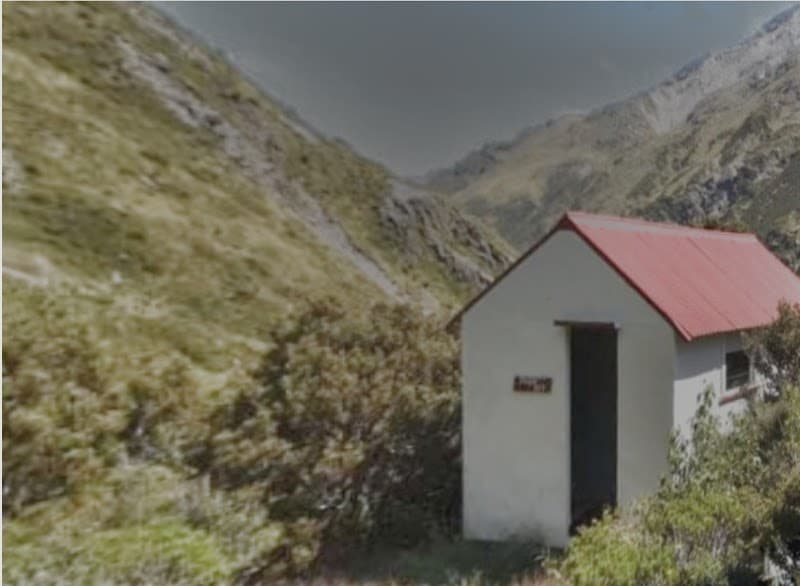
The oldest bivouac in Aoraki/Mount Cook National Park (South Island, New Zealand), still standing on its original site — also the oldest structure in the area. Set at 1650 m below the summit of the Footstool, just above the Te Waewae Glacier, it was built on the initiative of chief guide Peter Graham to make climbing Mount Sefton and the Footstool easier. Materials were carried in on foot and assembled on site; the hut was damaged by snow the very next winter, then repaired, and has remained largely intact ever since. Sleeps 4, open access, first come first served, no booking or fee. Sweeping view over the great ice walls of the Te Waewae. Unmarked route, steep terrain with real consequences — navigation skills essential. Daily radio check at 4:45 pm with the park's other huts.
Getting there
L'itinéraire, non balisé, exige une recherche d'itinéraire et une progression sur un terrain raide où le risque de chute est élevé. En hiver, il faut un bon niveau en alpinisme, des compétences en recherche d'itinéraire et une connaissance du risque avalanche pour y accéder. Il est conseillé de se renseigner au Centre d'accueil DOC d'Aoraki/Mount Cook avant le départ.
The setting
À 1650 m sous le Footstool, sommet de la ligne de partage des eaux des Alpes du Sud, ce bivouac offre depuis son perchoir une vue dominante, à proximité des grands séracs du glacier Te Waewae. C'est le plus ancien refuge du parc national Aoraki/Mount Cook encore sur son emplacement d'origine ; construit par le guide en chef Peter Graham pour faciliter l'ascension du Sefton et du Footstool, ses matériaux avaient été montés à dos d'homme.
A bit of history
En 1917, à l'initiative de Peter Graham, guide en chef d'Aoraki/Mount Cook, ce bivouac fut construit pour faciliter l'ascension du Sefton et du Footstool, avec des matériaux portés à dos d'homme jusqu'au site. Dès l'hiver suivant sa construction, il subit des dégâts liés à la neige, fut réparé, et se trouve depuis dans un état globalement stable. Il constitue aujourd'hui le plus ancien abri du parc national Aoraki/Mount Cook encore présent sur son emplacement d'origine.