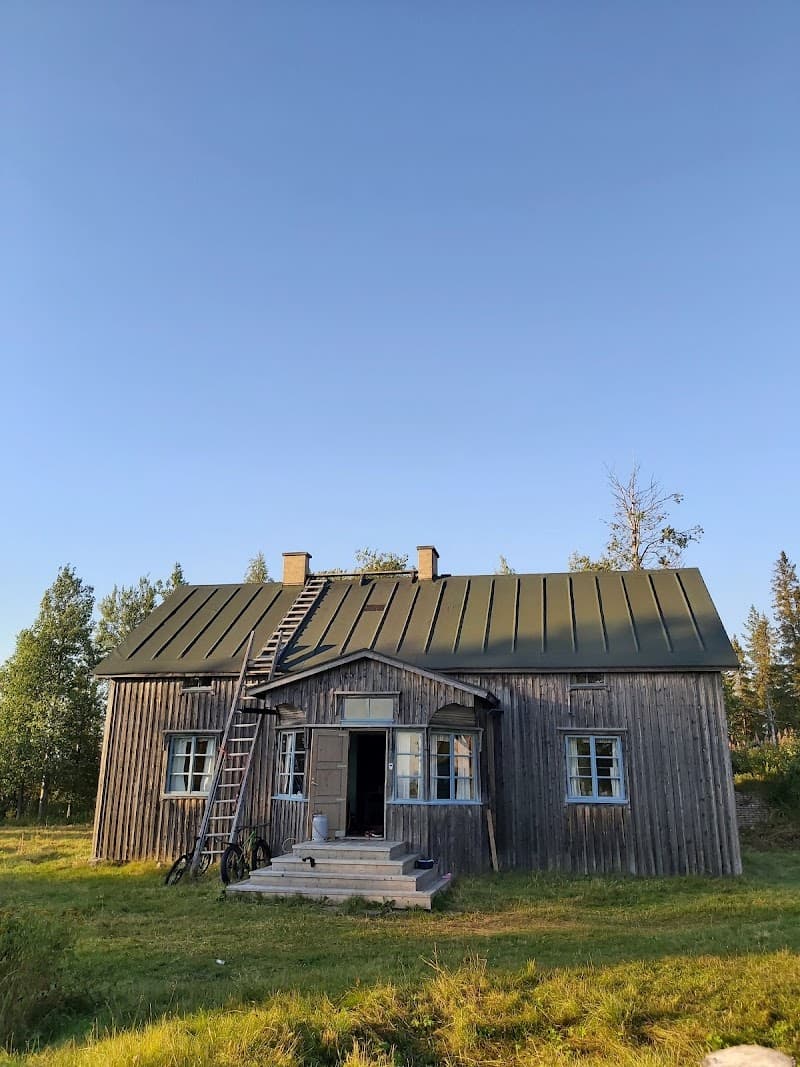
Дом Геолога
The place
Dom Geologa ("House of the Geologist") in Murmansk Oblast, Teriberka/Lovozero area (arctic Kola Peninsula, Russia), at a true elevation of ~30 m (the record's 0 m is acceptable for this arctic setting), on the arctic Barents Sea coastline. Continuous Russia arctic Kola cluster (batches 260-393). A shelter for geologists' expeditions across the Kola Peninsula (Kola, 100,000 km², arctic Sami land + Murmansk, 270,000 residents, the largest city in the Arctic, home to 40% of the total Arctic population + Nikel/Zapolyarny mining towns, Kola metals output 3 M tonnes/year + heritage of the Kola Sami/Sami-Lapps (Finno-Ugric people, 2,000 in Kola, Kildin/Skolt/Ter Sami languages + Kolttasaamelaiset revival + the ancient Kalotta trade route, 800 km, salt-for-reindeer trade among Norway-Sweden-Finland-Russia + Russian Arctic heritage, iconic + Admiral Ivan Papanin's North Pole expedition 1937-1938, iconic, hero of the USSR + the Chelyuskin steamship trapped in pack ice 1934, 100 people rescued by air).
The setting
Murmansk Oblast, Teriberka/Lovozero area, arctic Kola Peninsula, Russia, elevation recorded as 0 m, acceptable for this arctic setting, true elevation ~30 m, arctic Barents Sea coastline, continuous cluster batches 260-393, shelter for geologists + Kola 100,000 km², arctic Sami land + Murmansk 270,000, largest city in the Arctic, 40% of total Arctic population + Nikel/Zapolyarny mining towns, metals output 3 M tonnes/year; Kola Sami/Sami-Lapps, Finno-Ugric, 2,000, Kildin/Skolt/Ter Sami languages + Kolttasaamelaiset revival + the ancient 800 km Kalotta route, Norway-Sweden-Finland-Russia salt-for-reindeer trade + Russian Arctic heritage + Ivan Papanin's North Pole expedition 1937-1938, hero of the USSR + Chelyuskin 1934, 100 rescued by air.