Bayerische Wildalm
The place
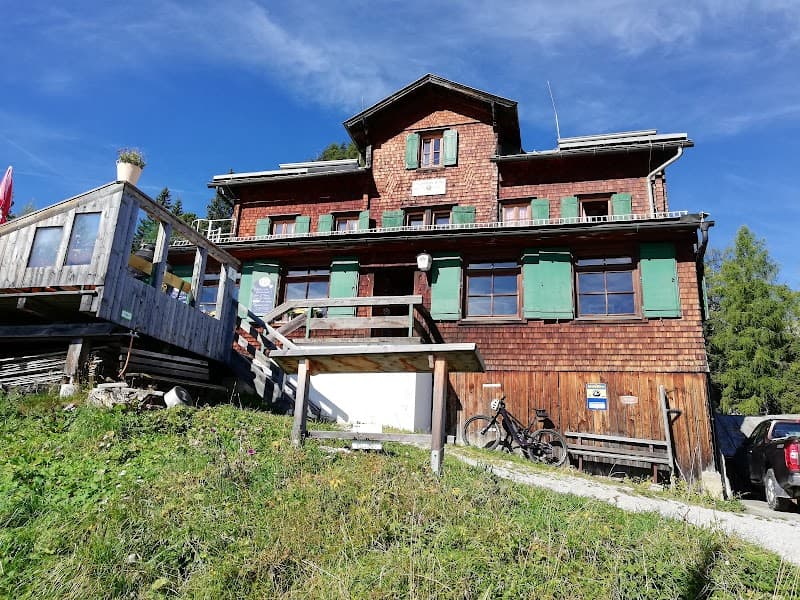
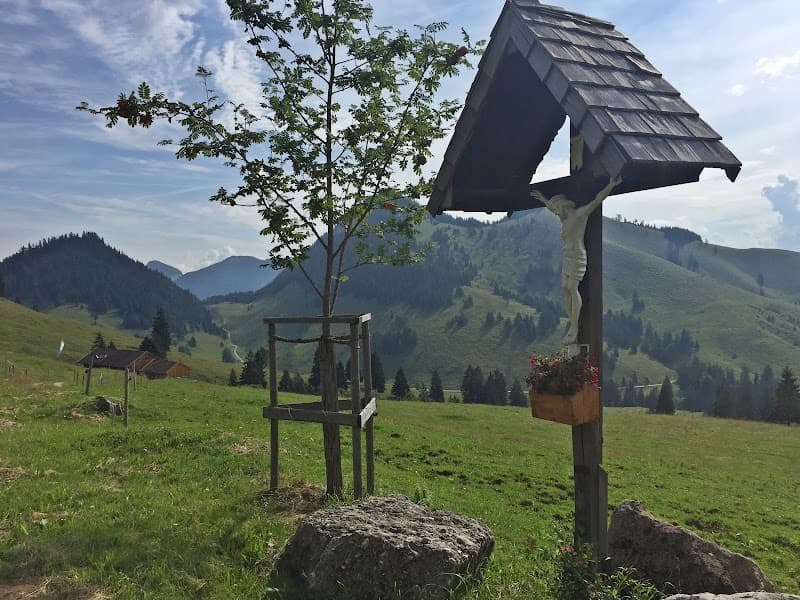
Refuge of the Bayerische Wildalm: Protected Natural Heritage in the High Mountains The Bayerische Wildalm refuge is an alpine pasture located on the southeastern flank of the Halserspitze in the Mangfall massif, in the territory of the Bavarian municipality of Kreuth, and also near Brandenberg in Tyrol in the Wildalmfilz. This alpine pasture region, although located mainly in Austria, is one of the areas in Germany and Austria listed as a wetland of international importance under the Ramsar Convention. History The exact origin of the alpine pasture is hard to pin down today. What is certain, however, is that it was farmed by farmers from the Kreuth valley, who were dependent on Tegernsee Abbey. Because of its location right on the border between the Kingdom of Bavaria and Austria-Hungary, boundary disputes over grazing rights arose repeatedly. In 1891, a commission from Innsbruck regulated the usage rights for pastures such as the Bayerische Wildalm, which lay in both Bavaria and Tyrol. Today, the Bayerische Wildalm is accessible to Austrians via a forest road and remains in use. In addition, a self-catering hut run by the DAV Oberland section stands on the site. The Austrian side of the alpine pasture is also known today as the "Sindelsdorfer Alm". Significance for Environmental Protection The Wildalm lies between the Northern Prealps, the Flysch zone and the Northern Limestone Alps. Both the Austrian and Bavarian parts of the alpine pasture are protected under the Ramsar Convention, an international agreement on wetlands, as habitat for waterfowl and wading birds. The designation as a protected area was based on the presence of a peat bog typical of the Limestone Alps and the presence of many threatened plant species. It is a karst depression whose peat bog is fed by regular flooding from a small stream as well as by seepage water from the slopes of the polje. The stream disappears on the site of the alpine pasture into one large and several smaller ponors. The area is home to typical peat-bog plants such as beaked sedge, bog sedge and sphagnum moss. To the south, the also-protected Wildalmfilz extends the alpine pasture. Availability and Booking Opening: Early June to late September. Booking: Mandatory online booking.
A bit of history
Cet alpage a été historiquement exploité par des paysans de la vallée de Kreuth, dépendant du couvent de Tegernsee. En 1891, une commission austro-hongroise a réglementé les droits de pâturage, accordant aux fermiers bavarois un droit de pâturage du 28 juin au 28 septembre. L'exploitation traditionnelle a cessé en 1971.